


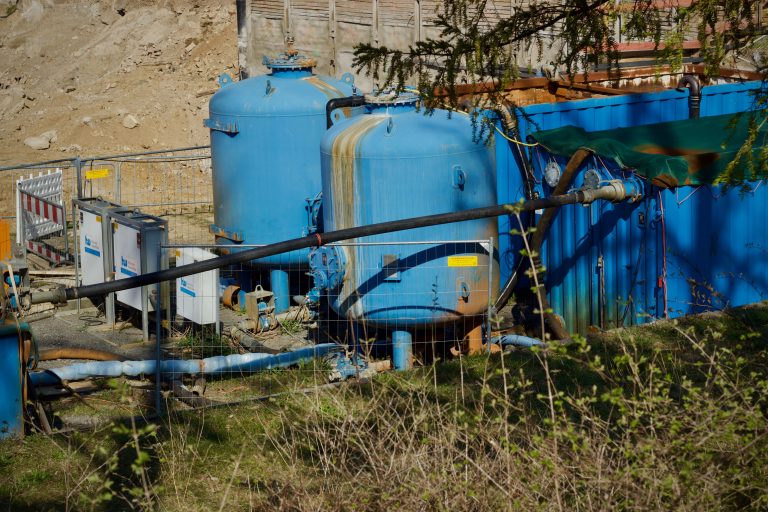
Britain’s first ozone-based micropollutant removal plants are providing valuable lessons for water utilities preparing to address emerging contaminants like PFAS and microplastics. These plants, engineered and delivered by Curio Water for Severn Trent in spring 2025, were installed at three sites: Frankton, Ludlow, and Itchen Bank.
The initiative draws inspiration from Europe’s first micropollutant removal plant in Neugut, Switzerland, which has been operational since 2014. The Neugut plant uses ozone to remove pharmaceutical residues, hormones, and pesticides, achieving removal rates of nearly 80% for approximately 200 detected compounds.
Lessons in Treatment Train Design
The experience gained from these UK plants highlights the importance of a “treatment train” approach, which involves a tailored series of processes designed around site-specific data. Each stage is engineered to complement the next, optimizing the effectiveness and cost-efficiency of contaminant removal.
One key challenge identified is the need for rigorous pilot testing to understand the water matrix and its behavior under treatment. This includes assessing seasonal fluctuations in contaminants and how their presence affects existing treatment methods. Innovations must also be integrated with existing infrastructure, considering capital limitations and strategically deploying advanced removal technologies where most effective.
An educational effort is also necessary across the industry to understand how complementary technologies, such as ozone, granular activated carbon (GAC), filtration, and UV, can work together. This integrated approach is particularly relevant for wastewater and PFAS removal, where high organic loads can compete for adsorption sites on GAC, reducing its lifespan.
In the BlueBarrier treatment trains developed by Curio Water, upstream stages address specific issues. Ozonation breaks down pharmaceuticals and pesticides, converting complex organic matter into more manageable components. Biologically activated carbon (BAC) filtration then consumes this treated matter, reducing the organic load that would otherwise compete for GAC adsorption sites. Ultrafiltration removes suspended solids and colloidal material, ensuring the water reaching the GAC is clean and has low turbidity. The GAC then serves as the primary barrier for long-chain PFAS and a polishing step for residual micropollutants. Finally, UV disinfection inactivates remaining microorganisms, with UV/AOP adding a further oxidation step for any trace organics.
Preparing for Evolving Regulations
The regulatory landscape for PFAS and micropollutant removal is evolving. In July 2025, the Independent Water Commission recommended that the UK and Welsh governments update the 1994 Urban Waste Water Treatment Regulations to align with the EU, considering stricter treatment for emerging contaminants. In February 2026, Defra published the UK’s first national PFAS Plan, indicating a consultation on potential statutory limits for PFAS in drinking water in England by December 2028.
The European Union’s updated Urban Wastewater Treatment Directive mandates quaternary treatment at large plants by 2045 and may introduce extended producer responsibility for advanced micropollutant removal. It also requires PFAS monitoring at plant inlets and outlets serving over 10,000 population equivalents where discharge is into a drinking water catchment. The European Commission is set to establish a methodology for measuring ‘PFAS Total’ and ‘Sum of PFAS’ by January 2027.
Waiting for regulations to be finalized may prove to be the more expensive option, according to the experience at Severn Trent. Investing now in understanding water quality, developing cost-effective treatment trains, and collaborating with partners can lead to higher treatment standards at a lower long-term cost.
The development of these treatment trains emphasizes collaboration, bringing together specialist technology partners such as Veolia’s Ozonia, Statiflow, Desotec, Nereus, and UV Guard, alongside research expertise from Cranfield University and a partnership with Ozcon Environmental. This approach designs the treatment train around the specific water conditions rather than a single company’s product.