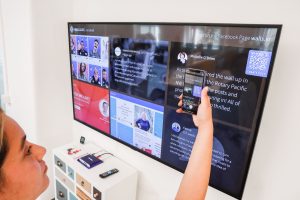



A Penn research team tested a platform designed to support conversation between patients and medical devices, using brain-monitoring data from 13 adults. The adults were receiving continuous electroencephalogram (EEG) monitoring in Penn’s Epilepsy Monitoring Unit, including for seizure evaluation or presurgical assessment. Penn’s report describes the test.
The platform combined software that continuously captured EEG data, a secure cloud environment that analyzed incoming information in near real time, and a smartphone application with a Penn-developed conversational agent powered by artificial intelligence. Patients could ask about brain activity, request visualizations, report symptoms, and receive alerts or surveys during the day.
What Conversation Between Patients Revealed
Researchers analyzed 1,307 messages exchanged between patients and the system during the study period. Many conversations concerned seizure events, sleep, mood, energy levels, and other factors that can influence seizure activity. Participants also answered surveys three times daily about sleep, anxiety, mood, well-being, and other symptoms.
Several participants said the platform helped explain patterns they had noticed but found difficult to understand. One participant said it helped “solidify what I felt to be true between some of my episodes and emotions.” Others valued access to sleep information and the possibility of warnings before major seizures.
Those comments describe participant experiences and interests, not measured clinical outcomes. The source does not report that the system reduced seizures, improved quality of life, or prevented emergencies. Researchers say ongoing work will assess whether the platform can affect seizure frequency and severity, quality of life, emergency department visits, and health care use.
Patients and Clinicians Could Correct the System
Participants could tell the system which seizures it identified correctly and which were false alarms. Researchers said this feedback substantially improved seizure identification. Clinicians could also review assessments and add notations about true seizures and false alarms.
The team used an “expert in the loop” algorithm to focus clinician input on high-value annotations and reduce the need for expert review. Researchers believe personalized systems may eventually require less clinical supervision, a future possibility rather than a result of this study.
The platform’s two-way design connects with wider questions about oversight for generative AI devices. Meditech Wire has covered an FDA discussion of device testing, but that proposal is separate from Penn’s research.
Next Studies Will Test Other Settings
The researchers see possible applications beyond epilepsy, including cardiac devices, insulin pumps, and emerging treatments for neuropsychiatric disorders such as Parkinson’s disease, depression, obsessive-compulsive disorder, addiction, and cognitive disorders. These are potential applications described by the team, not uses evaluated in the reported study.
Researchers are preparing studies with Lauren Hammer, an assistant professor of Neurology and Bioengineering, to apply the platform to automatically tune deep brain stimulation devices used to treat Parkinson’s disease. Further work is also incorporating wearables for insomnia, epilepsy, brain monitoring, and vital signs.
The team envisions future devices combining physiologic signals, patient feedback, and AI analysis while communicating with patients about symptoms and treatment goals. The source describes automatic treatment adjustment as a future possibility. It does not report that the tested platform adjusted treatment.
The work builds on a broader effort to develop brain-computer interfaces that sense physiologic signals, communicate with patients, learn from responses, and adapt treatment in real time. It is supported by a $5.6 million NIH Pioneer Award (DP1 NS122038-01). Researchers also plan to expand testing into outpatient settings using newer minimally invasive EEG and wearable technologies designed for continuous monitoring during daily life.
Related reporting has examined AI and clinical research infrastructure and AI tools entering health care. Those stories provide broader context; they do not describe Penn’s platform or this study.
Outpatient studies will show whether the approach can be evaluated during daily life beyond a hospital monitoring unit. For now, the reported work documents a small study of communication, feedback, and seizure-identification refinement, while its proposed clinical effects remain questions for future research.