


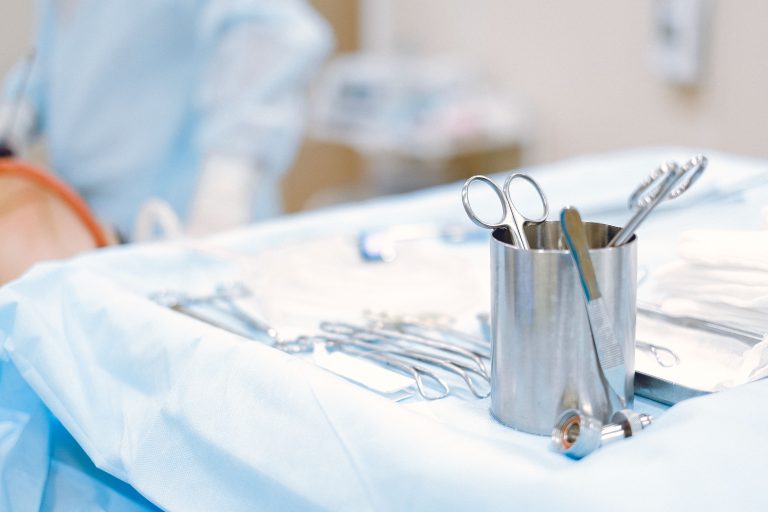
The Class II Path for spinal-imaging devices is now open to more manufacturers after the FDA published a final order on October 30, 2026. The order classifies spinal imaging systems for neuraxial procedures as Class II devices with special controls, creating a 510(k) route that other companies can use.
The category covers sensor-and-software systems that help clinicians locate the interspinous space before epidurals and related procedures. FDA codified the classification at 21 CFR 868.1985, under the anesthesiology devices part. The order took effect on October 30, 2026.
Class II Path Follows a De Novo Grant
The classification began with IntuiTap Medical’s VerTouch device. FDA’s Center for Devices and Radiological Health granted IntuiTap’s De Novo request on August 6, 2024, after the company submitted it more than two years earlier.

A De Novo grant classified the specific device under review. It did not, by itself, establish a regulation that other sponsors could cite for similar products. The new order closes that gap by setting a standing classification regulation.
Before an existing classification or predicate, a novel device type defaulted to Class III under the FD&C Act, regardless of its actual risk. Other companies developing similar spinal-imaging systems can now seek 510(k) clearance against the regulation and its special controls, without repeating IntuiTap’s multi-year De Novo review.
Special Controls Set the Compliance Requirements
The order lists requirements for a device to qualify as Class II rather than defaulting to Class III. Manufacturers must provide clinical performance testing showing the device works as intended under anticipated conditions of use, or a documented clinical justification if they do not perform that testing.
The listed controls also include software verification and validation, electromagnetic compatibility and electrical safety testing, and biocompatibility testing for patient-contacting components. Sterility testing applies where relevant. Labeling must state that the device is not a standalone diagnostic and is meant to assist, not replace, clinical judgment and standard technique.
The requirements give follow-on sponsors a defined set of controls to address in their submissions. Companies working on ultrasound-guided neuraxial localization or AI-assisted landmark identification can assess whether their products fit the generic device type, then evaluate the listed controls against their own designs.
Regulatory requirements for other device categories are also evolving. The FDA has separately proposed a testing framework for generative AI medical devices, as described in its AI device proposal. That proposal concerns a different technology and does not establish requirements for spinal-imaging systems.
VerTouch Prompted the Category
IntuiTap’s VerTouch is a handheld system that generates a real-time image of lumbar spinal anatomy. It is intended to help clinicians locate the interspinous space before needle insertion for labor epidurals, epidural steroid injections and epidural blood patches.
The source reports that the system may help clinicians with less experience or when palpation is difficult, including in patients with higher body-mass index or scoliosis. IntuiTap has conducted clinical studies comparing the device with ultrasound and manual palpation for labor-epidural site identification.
Other health technology projects show how medical devices and care delivery can intersect. A Penn team tested a platform linking patients and medical devices, while Hamilton Health Sciences backed four health innovations through its DRIVE SPARK awards. Those reports describe separate work and do not establish evidence for VerTouch.
The order creates a general classification, not a clearance for every product in the category. Any follow-on manufacturer still needs to show that its device meets the clinical, software, safety, biocompatibility and labeling controls. The next step for sponsors is to determine whether their systems fit 21 CFR 868.1985 and build their submissions around those requirements.
The FDA spinal-imaging classification order establishes the category-wide controls.