



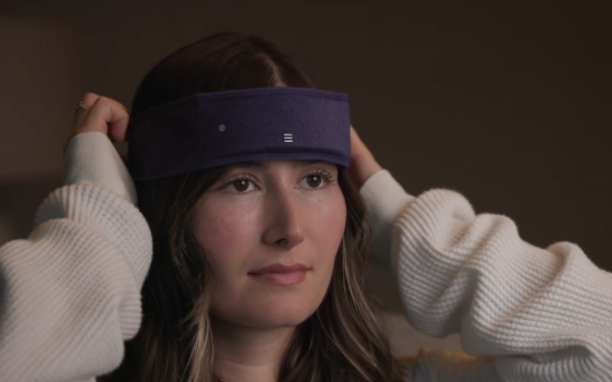
Chronic sleep disruption affects up to 70 million Americans, yet current treatments are often limited to behavioral therapy or medication, options that can be hard to maintain or come with long-term side effects. As evidence grows linking poor sleep to cognitive decline, metabolic issues, and overall brain health, the need for a safe, accessible alternative has become increasingly clear.
Spatial Sleep, a next-generation wearable developed by “TIME 100 Best Inventions” company SoundHealth, is emerging as a promising solution. The drug-free, non-invasive wellness device uses real-time, personalized sound patterns to guide the brain into deeper, more restorative sleep – without drugs or dependency. Grounded in rigorous clinical research, its design and technology was developed in collaboration with leading experts in Sleep Medicine affiliated with Harvard, Stanford, and Cedars-Sinai.
A Brain-Centered Approach to Better Sleep
Unlike white noise machines or meditation apps, Spatial Sleep uses sensors and adaptive sound frequencies that respond to each user’s unique physiology. Instead of masking symptoms, the device works with the brain’s natural rhythms to help ease the transition into the stages of sleep associated with restoration and recovery.
“Most sleep products either sedate you or drown you in noise, and have lasting side effects,” said Dr. Paramesh Gopi, CEO of SoundHealth. “Spatial uses the world’s largest living craniofacial dataset to create a zero-side-effect acoustic wearable tuned to your facial structure.”
Clinical Outcomes: Measurable Results
In a recent clinical study, 90% of participants using Spatial Sleep saw improvement in their Insomnia Severity Index (ISI) scores, with an average reduction of 50%. Additional findings included:
- 30% faster sleep onset
- 40% fewer nighttime awakenings
- Notable increases in deep and REM sleep duration
These results suggest that personalized acoustic therapy may offer a meaningful alternative for people dealing with chronic insomnia, stress-related sleep issues, or age-related changes in sleep patterns.
Implications for Cognitive Health
The scientific community has increasingly viewed sleep as one of the most important lifestyle factors tied to long-term brain health. Research shows that when slow-wave sleep is disrupted, the brain’s natural “clean-up” processes, which help remove amyloid-beta and tau proteins linked to Alzheimer’s, can become less efficient.
By supporting deeper slow-wave sleep, Spatial Sleep encourages exploration into how non-pharmacological tools might play a role in long-term cognitive wellness. While Spatial Sleep is not a diagnostic or treatment device for neurodegenerative disease, its underlying mechanism aligns with several active areas of Alzheimer’s and healthy-aging research.
A Scalable, Consumer-Ready Neurotech Platform
Part of Spatial Sleep’s appeal is how simple it is to use. The lightweight, drug-free headband is designed for nightly wear and pairs with an app that gives users clear insights into how factors like stress, caffeine, or bedtime routines affect their sleep.
SoundHealth’s focus on everyday accessibility, combined with clinically validated technology, positions Spatial Sleep as part of the next wave of consumer neurotech: solutions that fit into daily life while delivering measurable benefits.
The Road Ahead
As interest grows in the role of sleep in overall brain health, tools that safely and effectively improve sleep quality may become central to preventative care. Spatial Sleep offers an evidence-based model for how personalized acoustic therapy can gently guide the brain into deeper rest – an innovation poised to reshape how we think about sleep medicine.


