


Merck KGaA won U.S. approval for Pimjetmi, a once-daily treatment for adults with tenosynovial giant cell tumor (TGCT) when surgery could worsen joint function or cause severe complications. The decision gives the company another approved medicine in its rare-tumor portfolio and adds a new option for a condition where surgery has been central to care.
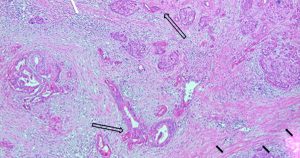
The Food and Drug Administration decision covers Pimjetmi, the brand name for pimicotinib, which was known by that name during development. TGCT tumors arise in joints and surrounding tissue. The source notes TGCT is not considered cancer because these tumors do not spread, although they can become painful and disfiguring and impair movement without removal.
Surgery does not always end the problem. Tumors can return after removal, and the operation itself may carry risks of complications. The FDA approval applies to adults for whom surgery could worsen joint function or lead to severe complications, according to the approval report.
Why Pimjetmi Marks Another Win
Pimjetmi’s approval was supported by a Phase 3 clinical trial. At 25 weeks, the study drug produced an overall response rate of 56%, compared with 3% among participants given a placebo, the source reported. Those figures describe the trial results, not a guarantee of response for an individual patient.
The study also found clinically meaningful and statistically significant improvements on secondary goals measuring range of motion, physical function and pain. Detailed data for the TGCT therapy were presented at the 2025 annual meeting of the American Society of Clinical Oncology.
Pimjetmi is a small molecule designed to block the colony-stimulating factor 1 receptor. The source explains that TGCT stems from a genetic abnormality that causes overexpression of colony-stimulating factor 1, a protein that recruits cells promoting tumor growth. The drug targets that receptor as its intended mechanism.
Liver Precautions Remain Part of the Treatment Picture
The FDA-approved treatment enters a field that already includes two small molecule inhibitors of the same receptor. Daiichi Sankyo’s Turalio became the first TGCT drug approved by the FDA in 2019. Its twice-daily pill carries a black box warning for liver toxicity, and the source says that safety risk kept it from receiving marketing authorization in Europe.
Ono Pharmaceuticals markets Romvimza, which followed the 2024 acquisition of Deciphera Pharmaceuticals. The FDA approved the twice-weekly capsule last year. Its label has no black box warning, but advises against use by people with high liver enzyme levels because of potential liver risks.
Pimjetmi’s label carries a similar precaution, according to the source. Merck reported that its pivotal trial found the study drug was well tolerated, with no evidence of liver toxicity. That company-reported trial observation does not remove the label’s stated precaution.
Merck Builds Its Rare-Tumor Portfolio
Pimicotinib was first developed by Shanghai-based Abbisko Therapeutics. Merck secured rights to commercialize the drug in Greater China in 2023, along with an option for rights elsewhere. The company paid $85 million last year to exercise that option, the source reported.
The approval adds to other rare-tumor assets Merck has obtained through business deals. Last year, Merck paid $3.9 billion to acquire SpringWorks Therapeutics, which had two FDA-approved therapies for rare tumor types. Last month, Merck agreed to buy Silence Therapeutics in a $1.1 billion deal. The company’s lead asset is a small interfering RNA therapy on track for a pivotal test in polycythemia vera, a rare blood cancer.
Pimicotinib had already received approval for TGCT in China late last year, followed by approvals in Canada and Switzerland. Its regulatory review in Europe remained ongoing in the source account. The U.S. approval therefore expands the drug’s authorized markets while Merck’s portfolio strategy continues through both product approvals and acquisitions. Related reporting has examined another treatment avenue, a cancer vaccine trial and partnerships in digital health.