



Traditional pharmacy-by-pharmacy dispensing models are struggling to keep up with the growing number of prescriptions, staffing challenges and pricing concerns. Instead of burdening individual locations, companies are shifting toward centralized systems that separate fulfillment from clinical care. Central fill pharmacy solutions empower pharmacists to reclaim their role as caregivers, rather than just verifying counts.
What Are Central Fill Pharmacy Solutions?
Central fill pharmacy services refer to specialized facilities that handle high-volume prescription filling for multiple pharmacies within a network. In this setup, the local pharmacy receives the patient’s order but routes fulfillment to a central hub.
It differs from the traditional in-house model, where each pharmacy manually manages its own inventory. By aggregating demand, central fill solutions handle the repetitive tasks of dispensing, while local sites manage the final handover and patient consultation.
How Do Central Fill Pharmacy Solutions Improve Efficiency Compared to In-House Setups?
Centralizing operations brings significant changes to pharmacy performance — and this trend is rising fast. The global central fill automation market is expected to grow by $480.41 million from 2023 to 2027, driven primarily by efficiency improvements and error reduction capabilities.
- Fewer errors: Automated dispensing helps achieve fulfillment accuracy. Safety improves considerably when stocks are no longer counted manually.
- Increased prescription volume: Central hubs use robots to process thousands of prescriptions per shift.
- Frees up pharmacist time: Outpatient medication retrieval times drop by 50% with a streamlined dispensing workflow. Local staff can then focus on revenue-generating activities, such as managing medication therapy and vaccinations.
- Better inventory management: Centralization consolidates stock, cuts down wastage from expired products and simplifies bulk purchasing.
Top Centralized Prescription Filling Providers
Five companies stand out in the pharmacy automation space. Selection criteria included system capacity, integration capabilities, scalability and contributions to advancing high-volume distribution technology.
Capsa Healthcare

Capsa Healthcare is best known for high-throughput automation through its Central Fill and Mail Order Pharmacy Automation Solutions. Its approach focuses on modularity, which lets health systems grow their operations without massive infrastructure changes.
Capsa Healthcare’s systems work with Kirby Lester counting technology to ensure accuracy. It also stands out for its CentraScript operating system, which handles the entire fulfillment process, making it a strong contender for users seeking flexible growth options.
ScriptPro

ScriptPro’s Central Fill Module is known for its ability to group multiple orders for the same patient into a single package. Its solutions include robotic dispensing to ensure that the right medications reach the correct patient with minimal human intervention. Its system scales to accommodate small to high-volume facilities.
ARxIUM

ARxIUM’s OptiFill system is recognized for its ability to process tens of thousands of prescriptions per day. It uses its proprietary PPS software to handle complex workflows, ensuring that every step, from inventory retrieval to final packaging, is carefully monitored and controlled. Its platform supports both centralized operations and community pharmacy workflows.
Innovation Associates
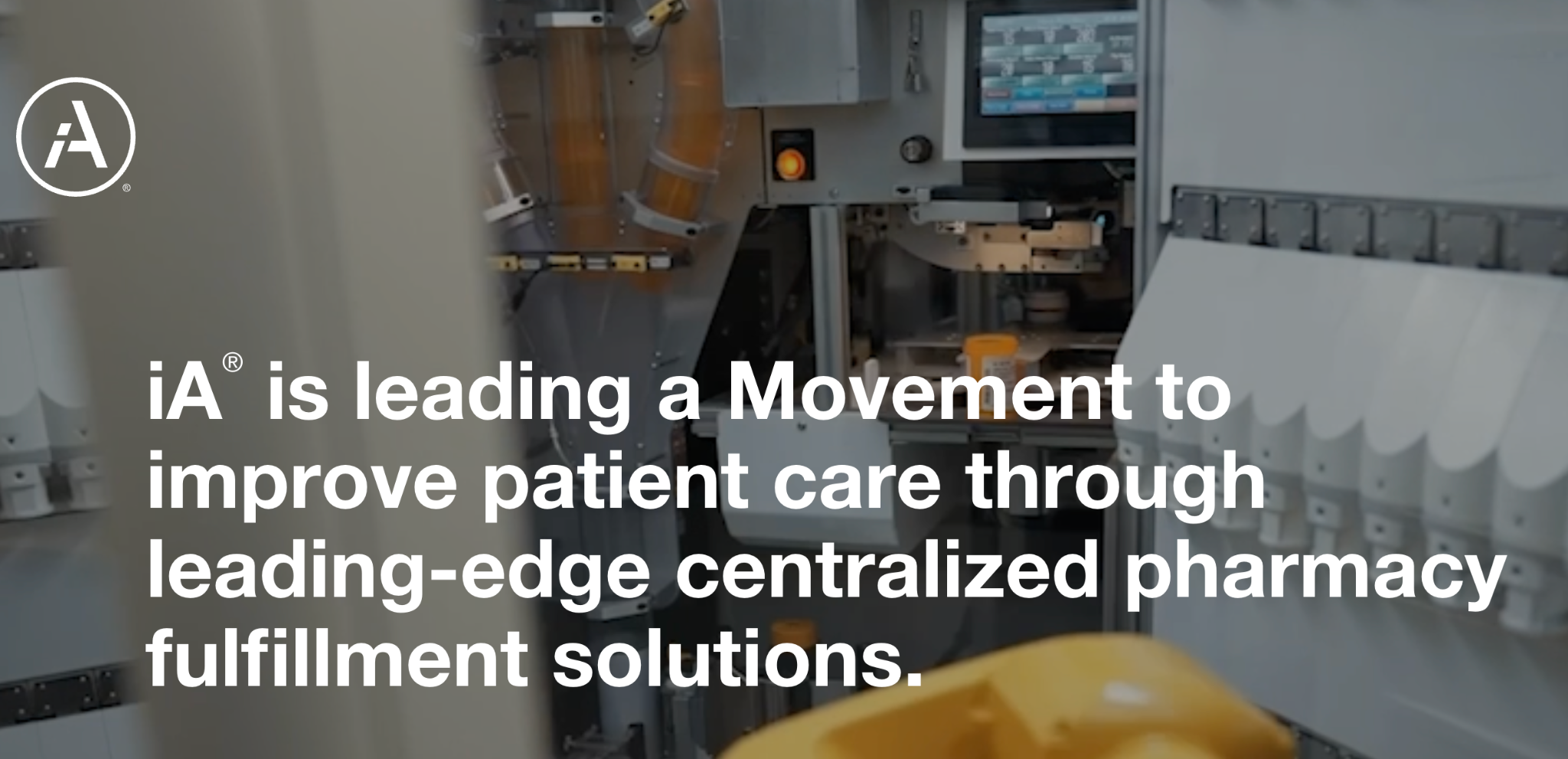
Innovation Associates (iA) meets the needs of high-volume operations through its PharmASSIST automated dispensing technology. Its platform enables the accurate dispensing of prepackaged products, such as creams and inhalers — items that often trip up traditional pill-counting robots. It covers the entire prescription fulfillment process, from entry to verification.
BD Parata
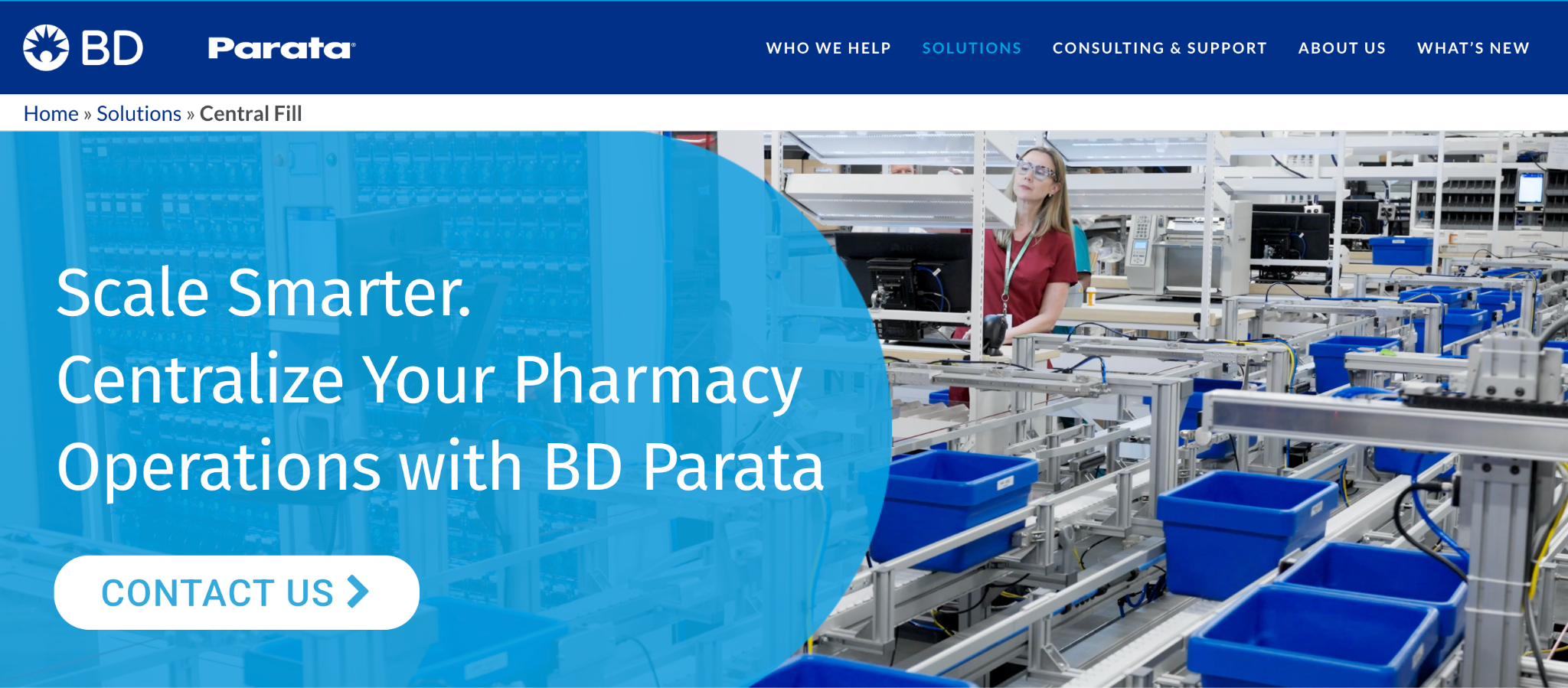
Now part of Becton Dickinson and Company, BD Parata optimizes fulfillment through its ATP Series, which can organize medications by dose time, rather than just by vial. This is valuable for operations serving long-term care facilities or patients with complex chronic conditions who benefit from simplified adherence tools. Its features also include RFID conveyance systems and robotics for workstation replenishment.
Central Fill Solutions Providers At a Glance
Here’s a quick look at each company’s key features and capabilities.
| Provider | Core Strength | Primary Market |
| Capsa Healthcare | Modular scalability | Health systems and mail order |
| ScriptPro | Integrated workflow | Health systems and retail chains |
| ARxIUM | High-volume throughput | Multi-market |
| iA | Software intelligence | Independent and chain pharmacies |
| BD Parata | Adherence packaging | Long-term care facilities |
The Bottom Line
Centralized operations provide a solid base for modern healthcare efficiency. By shifting fulfillment off-site, pharmacies can reduce expenses and empower staff to prioritize impactful patient care.